
Home Network & WiFi Services
Ethernet & Network Cabling
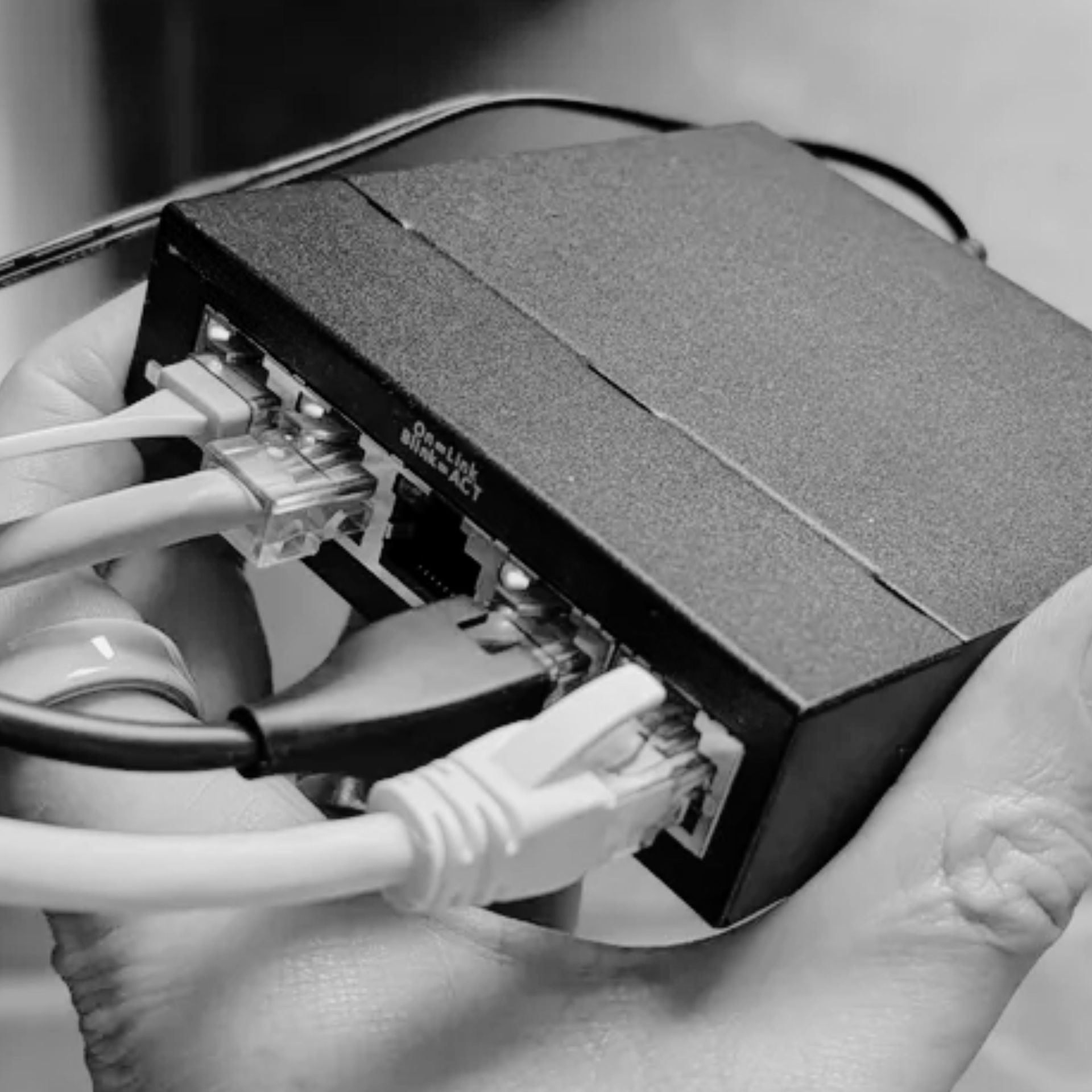
A More Reliable Foundation for Your Home Network
WiFi makes it easy to connect almost everything in your home, but wireless isn't always the best solution for every device or every part of your property. If your WiFi is unreliable in certain rooms, your home office keeps disconnecting, your television buffers, or your security cameras struggle to stay connected, a wired network may be part of the solution.
Our team at Huntington Security Systems provides professional Ethernet and network cabling designed to create a more stable foundation for your home's technology. Instead of adding another wireless device when you have a connectivity problem, we review your network structure and determine where wired connections can make a meaningful difference. Our goal is to build a network that is organized, reliable, and able to support the entire ecosystem of technology you use throughout your home every single second of every single day.
Why Use Ethernet in a Home?
A wired Ethernet connection provides a direct connection between a device and your network. Unlike WiFi, it doesn't depend on the wireless signal traveling through walls, floors, or other obstacles. That can make a noticeable difference for devices that need a dependable and stable connection. Ethernet can be particularly useful for:
- Home office computers
- Televisions and streaming devices
- Gaming systems
- Security cameras
- WiFi access points
- Desktop computers
- Smart-home equipment
- Network-connected appliances and other devices
You don't necessarily need to connect everything in your home with Ethernet. The goal is to identify the places where a wired connection provides the most value and build your network around those needs.
When WiFi Isn't Enough
Wireless technology has come a long way, but every home presents different challenges. A router may work perfectly in your living room but provide a weak connection upstairs. A home office may be too far from the router. A security camera mounted outside may struggle to maintain a reliable wireless connection. Or a television may constantly buffer even though your internet service is fast. Your internet provider doesn't always cause these problems. Your home's structure, distance from the router, interference, the number of connected devices, and how your network is built can all affect performance. Adding more wireless equipment can help, but in many situations, a wired connection to the right location provides a more dependable and long-term solution.
Build Stability Into Your Network
Huntington Security Systems approaches network cabling as more than simply running a cable from one room to another. We look at how the different parts of your network fit together and where a wired connection can provide the most benefit. This creates a stronger foundation for your WiFi and connected devices. For example, you can use Ethernet cabling to connect wireless access points throughout a larger home. Instead of relying on an access point to communicate wirelessly with another device, it can connect directly to your network with a wired connection. This can help provide more consistent WiFi coverage while giving your network a more stable structure.
A Better Connection for Your Home Office
Working from home can make network problems much more noticeable. Video meetings, cloud applications, large files, remote systems, and other work-related tasks can all suffer with an unreliable connection. If your office is located far from your router, relying entirely on WiFi may not provide the consistency you need. Running Ethernet directly to your home office can provide a dependable connection for your computer, docking station, or other equipment. It also means your work connection isn't competing with every other wireless device in the house for the same signal.
Keep Your Entertainment Running Smoothly
Streaming has become a major part of how we use our homes. Televisions, streaming boxes, gaming consoles, and other entertainment devices can all place significant demands on your network. A wired connection can be especially helpful for devices that stay in one place and regularly use large amounts of data. Connecting your main television or gaming system through Ethernet can reduce reliance on WiFi and provide a more consistent connection for streaming, gaming, and other activities. If your TV constantly buffers even though your internet service is fast, the issue may be the connection between your TV and your network, not the speed coming into your home.
Support Your Security Cameras
Security cameras need a dependable network connection to send video where it needs to go. If a camera is far from your router or in an area with weak WiFi, it may drop connections or perform inconsistently. Ethernet can provide a more reliable connection for cameras in strategic locations around your home. Depending on the system, it can also deliver both network connectivity and power through the same cable. Huntington Security Systems can treat your security cameras as part of the overall network design rather than a separate system.
Ethernet Can Actually Improve Your WiFi
It may seem counterintuitive, but adding Ethernet can actually help create a better wireless network. Wireless access points placed throughout a larger home can provide additional WiFi coverage. When those access points connect back to the network via Ethernet, they have a reliable wired connection instead of relying on another wireless signal to communicate with the rest of the network. This can effectively improve coverage in larger homes, multi-story properties, and areas where a single router cannot provide reliable service. Instead of trying to make WiFi reach farther and farther, we can use Ethernet to create the infrastructure needed to distribute WiFi more effectively.
Structured Cabling for a More Organized Home
As you add technology to a home over the years, network equipment and cables can quickly become difficult to manage. Routers, switches, cameras, televisions, access points, computers, and other devices may all end up connected in different ways. Without a plan, your network can become difficult to troubleshoot or expand.
Huntington Security Systems focuses on creating a more structured network infrastructure. We consider where your equipment is located, how connections should be distributed, and how your network may need to grow over time. Where appropriate, we can organize network equipment and cabling so the system is easier to maintain and update later. A well-structured network isn't just cleaner. It gives you a better foundation for everything connected to it.
Cat6 and Cat6A Network Cabling
The cabling you use can depend on your network needs and the devices you're connecting. Huntington Security Systems can install Ethernet cabling such as Cat6 and Cat6A where appropriate. These cables can support high-speed network connections and provide the wired infrastructure needed for computers, access points, cameras, entertainment systems, and other connected technology. You don't need to decide which cable type your home needs. We'll take a look at your current setup, how you'll use the connections, and what you may want your network to support in the future.
Ethernet for New and Existing Homes
Network cabling isn't only for new construction. We can work with existing homes to determine where to install Ethernet and where wired connections would provide the most benefit. Depending on the property, we may route cabling through walls, ceilings, attics, crawl spaces, or other accessible areas. If you're remodeling or building a home, it's also an excellent opportunity to plan network cabling before walls are closed. Whether you're starting from scratch or improving an existing network, we can help create the wired infrastructure your home needs.
A Network Designed Around Your Home
There’s no reason to run Ethernet to every room simply because you can. The better approach is to understand how you use your home and determine where wired connections will actually make a difference. Huntington Security Systems looks at your home, your existing network, the technology you rely on, and the problems you’re experiencing to determine where cabling makes the most sense. That may include your home office, television or gaming area, security cameras, or wireless access points throughout the property.
We also consider how your internet enters the home, where your network equipment is located, which devices need reliable connections, where WiFi coverage may be struggling, and how your technology could expand over time. From there, we can determine where wired connections can improve reliability and how everything should connect. Our goal is to create a structured network that provides stability, keeps your equipment organized, and gives your home's technology a reliable foundation.
Build a More Reliable Network
Your home doesn't need to rely entirely on wireless connections to stay connected. Strategically installed Ethernet can provide stability where you need it most while giving your WiFi and connected technology a stronger foundation. Whether you're improving a home office, connecting security cameras, eliminating unreliable connections, or building a more structured network, Huntington Security Systems can help. Contact our team today to learn more about Ethernet and network cabling for your home.
Do I really need Ethernet if I already have WiFi?
Not necessarily. WiFi is ideal for many devices, but Ethernet can provide a more stable connection for equipment that stays in one location or requires consistent performance. The right combination of wired and wireless connections depends on your home and how you use your network.
What devices should I connect with Ethernet?
Common examples include home office computers, televisions, gaming systems, security cameras, and wireless access points. Stationary devices or those that need a particularly reliable connection are often good candidates for Ethernet.
Can you install Ethernet in an existing home?
Yes. We provide network cabling for existing homes and new construction. We'll review your home's structure and identify practical ways to route cabling to the locations you need.
What is Cat6 cabling?
Cat6 is a type of Ethernet cable commonly used for home networks. It supports high-speed wired connections and suits many applications, including computers, access points, televisions, and other network-connected devices.
Can Ethernet help with WiFi dead zones?
It can. You can use Ethernet to connect additional wireless access points in areas where your current WiFi signal is weak. Instead of relying on a weak wireless signal to extend coverage, the access point can connect directly through the wired network.
Do I need Ethernet in every room?
No. A well-designed network doesn't necessarily require a wired connection everywhere. We focus on the locations where Ethernet will provide the most benefit and use wireless connectivity where it makes sense.